
"Just Wait and Watch" — The Most Expensive Advice in Child Development
Arjun's mother came to me when he was four and a half. She had first noticed the signs when he was two. She had taken him to a paediatrician at two and a half.
"Wait and watch," the doctor said. "Boys develop slower. He will catch up."
At four and a half, she sat in my clinic, holding two years of notes she had kept.
"Have I lost time?" she asked. "Have I made it worse by waiting?"
Section 01
What Is Happening in the Brain Between Age 1 and Age 6
Between birth and age three, the brain forms approximately one million new neural connections every second.
Between age three and age six, the brain enters a phase called synaptic pruning — eliminating connections not being used and strengthening those that are.
A child who receives targeted, consistent, evidence-based intervention before age three is receiving that support while the brain is still in its maximum growth phase.
Section 02
What the Research Actually Says
A 2021 meta-analysis in JAMA Pediatrics covering 6,240 children across 118 studies found that early intervention initiated before age three produced effect sizes nearly double those of intervention initiated after age five across communication, cognitive, and adaptive behaviour outcomes.
The Early Start Denver Model has consistently shown that children beginning intensive intervention before age two show significantly larger gains in IQ, language, and adaptive behaviour.
Section 03
What "Wait and Watch" Actually Costs
Every month of delay is a month during which:
Communication pathways that could be strengthened with speech therapy are not being strengthened
Sensory processing patterns that could be supported with OT are consolidating without support
Social learning opportunities are passing without the scaffolding that makes them teachable moments
This is not said to create guilt — it is said because parents currently being told to wait deserve to know what that waiting costs.
Section 04
What Early Intervention Before Age 3 Actually Looks Like
For a child under three, early intervention is primarily play-based and home-based.
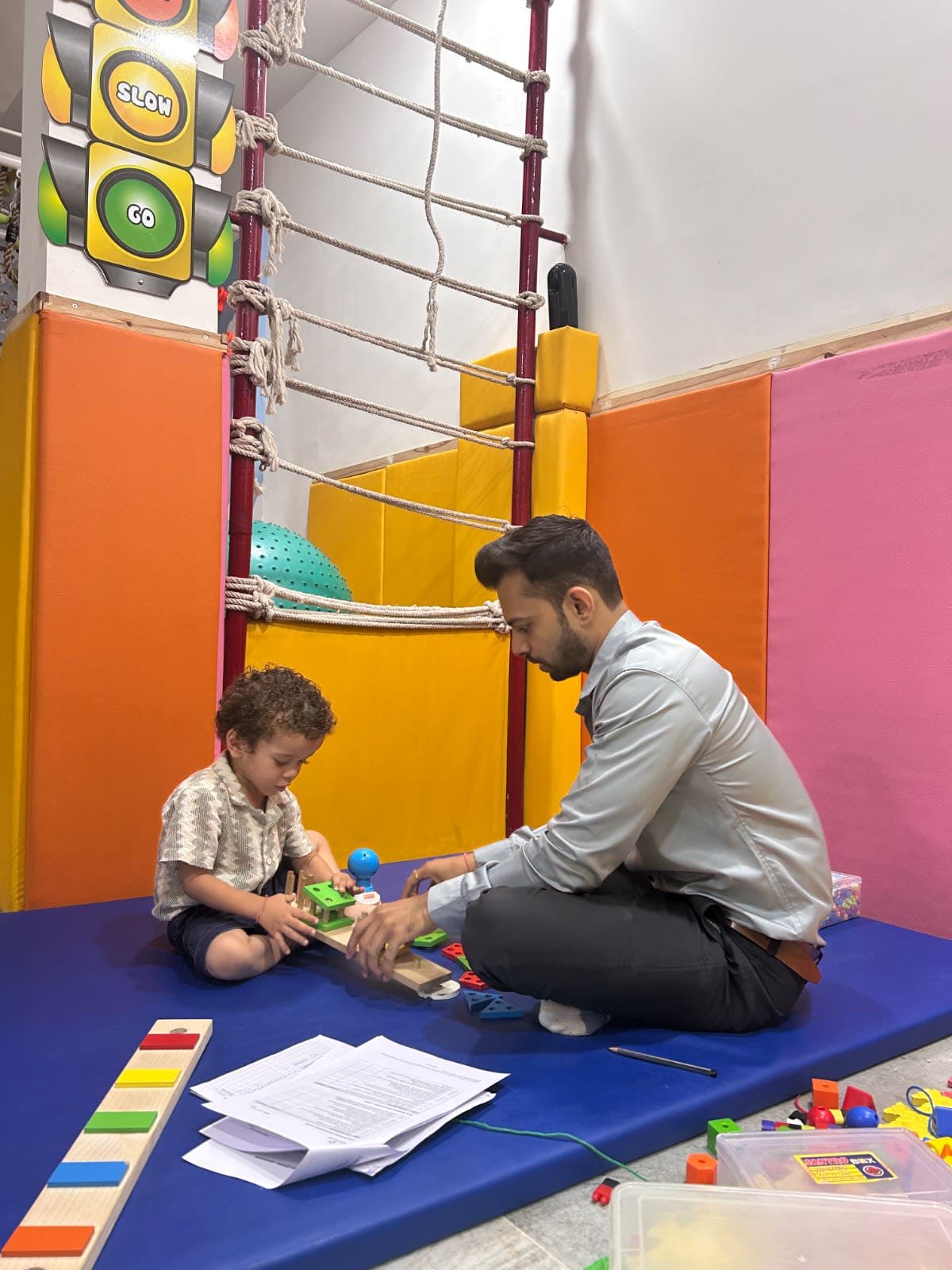
It looks like a therapist sitting on the floor with your child, following their lead, expanding their play.
It looks like teaching you — the parent — how to create communication opportunities during bath time, mealtimes, and daily routines.
Early intervention may include:
Parent-mediated intervention — parents trained to implement strategies in daily life
Naturalistic developmental behavioural interventions — play-based, embedded in natural interactions
Speech and language support focused on communication foundations
Sensory regulation support
If Your Child Is Already Past Age 3 — Or Past Age 6
You have not missed the window.
There is no window that closes.
What is true is that the work may be more intensive and gains may take longer. But progress — real, meaningful, functional progress — is achievable at every age.
The question is never "is it too late?"
The question is always "what is the best intervention for where this child is right now?"
If your child is under three and you have concerns, reach out through thechildpsychologist.in or call 7999215093. An initial conversation costs nothing.
Section 05
If You Are in Indore or Nearby
If you are based in Indore, Bhopal, Ujjain, Dewas, or nearby areas, Dr. Vini Jhariya is available for in-person consultations.
For families outside Indore — across India and internationally — online consultations are available through thechildpsychologist.in.
Address: 100-A Baikunth Dham Colony, Old Palasia, Saket, Indore, Madhya Pradesh
Phone: 7999215093
Website: thechildpsychologist.in
A note for parents
This article is educational guidance and does not replace an individual psychological consultation or assessment.
Questions and answers